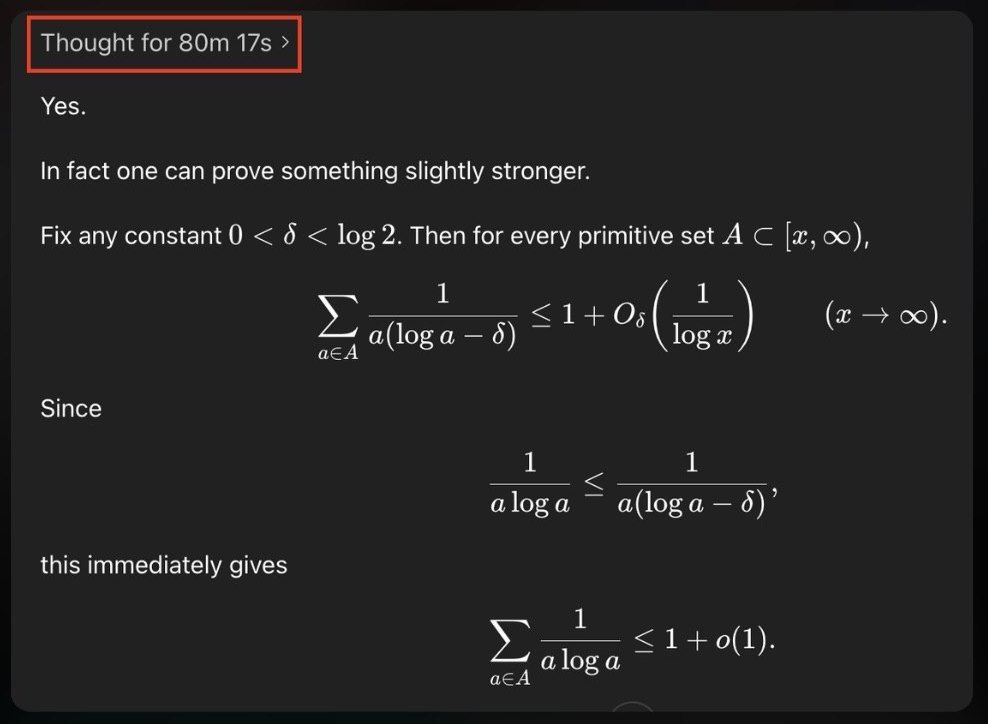
A 23-year-old with no formal background in mathematics may have helped solve a problem that stood for over 60 years. The case centers on Erdős Problem #1196, a difficult question in number theory that had remained unsolved for decades.
Instead of academic training, the breakthrough reportedly came from using AI as a thinking partner. By prompting models like ChatGPT, the individual explored different approaches until the system produced a promising line of reasoning.
What followed was not instant validation, but a process. The output had to be reviewed, checked, and refined by mathematicians, who worked through the logic to determine whether it held up as a formal proof.
The story stands out not because AI replaced expertise, but because it lowered the barrier to entry. Someone without deep mathematical training was able to engage with a high-level problem by leveraging computational tools.
It also reflects a broader shift: knowledge creation is becoming more accessible, and the role of individuals may change from solving everything themselves to asking the right questions and guiding powerful systems.
If confirmed, the case suggests a new model for discovery—where curiosity, combined with AI, can open doors that were once limited to specialists.